 Pumps
PumpsComplete Guide to Slurry Pump O-Rings: Selection, Installation & Maintenance
Published June 18, 2026 · By Coolair Group Engineering · 12 min read
O-rings are among the most critical yet often overlooked components in slurry pump assemblies. A failed O-ring can lead to slurry leakage, bearing contamination, seal failure, and costly unplanned downtime. In mining operations where pumps run 24/7 under extreme conditions, choosing the right O-ring material and maintaining proper installation practices can mean the difference between 6 months of reliable operation and a catastrophic failure after just a few weeks.
This comprehensive guide covers everything you need to know about slurry pump O-rings — from material selection and chemical compatibility to installation procedures and preventive maintenance strategies.
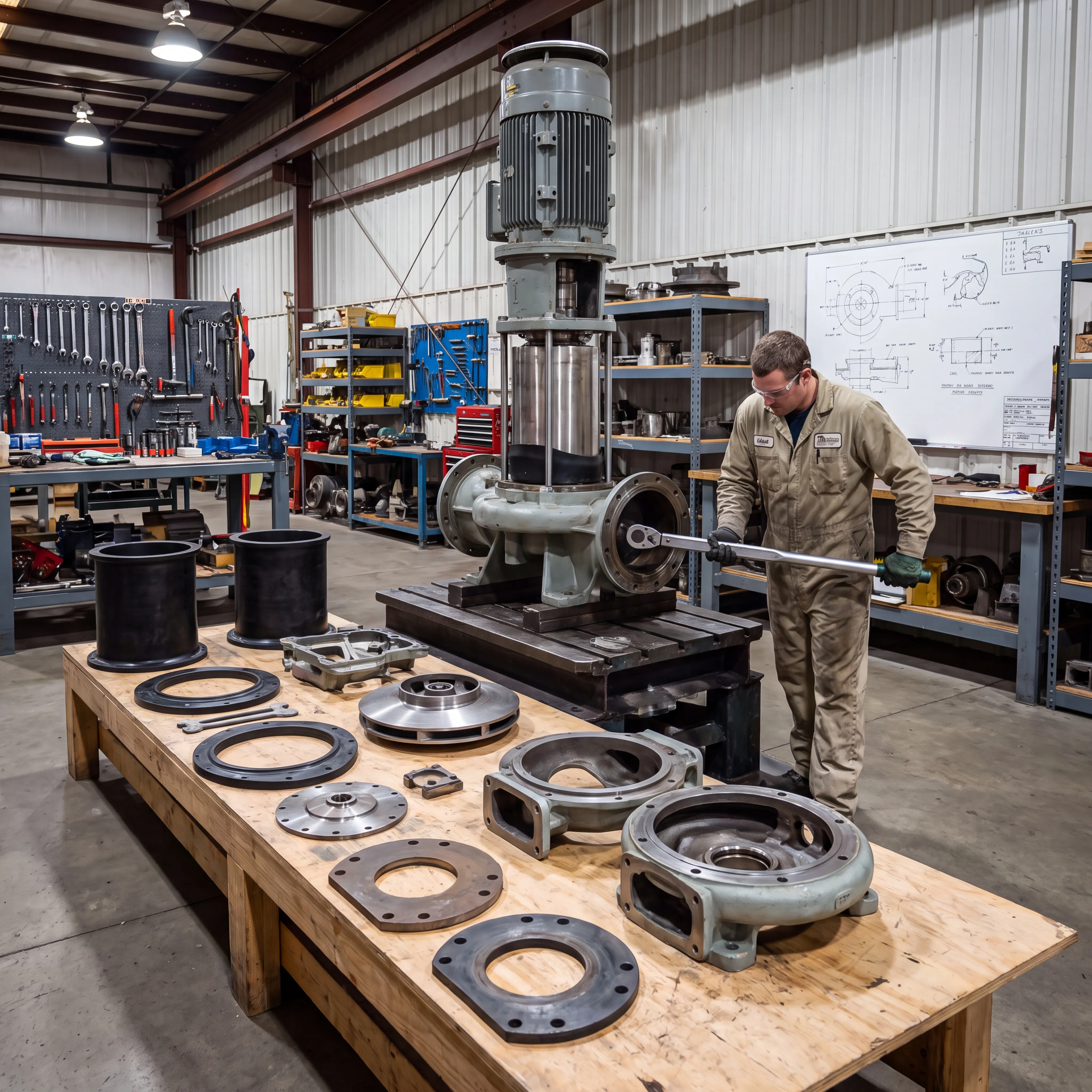
Why O-Ring Selection Matters in Slurry Pumps
Unlike standard water pumps, slurry pumps operate in environments that combine multiple stress factors simultaneously:
- Abrasive particle exposure — slurry particles can erode O-ring surfaces and groove walls
- Chemical attack — many mining slurries contain acids, alkalis, or process chemicals that degrade elastomers
- Temperature extremes — pump discharge temperatures can range from near-freezing in arctic operations to 90°C+ in hot-climate tailings circuits
- Pressure cycling — start/stop cycles and variable flow rates create repeated pressure stress on sealing surfaces
- UV and ozone exposure — outdoor installations subject O-rings to accelerated aging
Selecting an O-ring without considering these factors is a recipe for premature failure. Let's examine the three primary elastomer compounds used in mining slurry pump applications.
O-Ring Material Comparison
The table below compares the three most common O-ring materials used across Warman, KSB GIW, and Metso slurry pump platforms:
| Property | Viton (FKM) | EPDM | NBR (Buna-N) |
|---|---|---|---|
| Temperature Range | -20°C to +200°C | -40°C to +150°C | -30°C to +120°C |
| Chemical Resistance | Excellent — oils, fuels, acids, solvents | Good — water, steam, alkalis, acids | Moderate — oils, fuels; poor with ketones |
| Abrasion Resistance | Good | Moderate | Good |
| Tear Resistance | Good | Good | Excellent |
| Compression Set | Excellent (low set) | Good | Moderate |
| Cost (Relative) | High (3-4x NBR) | Medium (1.5-2x NBR) | Baseline |
| Shore A Hardness | 70-90 | 50-80 | 60-90 |
| Best For | High-temp, chemical-heavy circuits | Steam, hot water, alkaline slurries | General-purpose oil-containing slurries |
Material Selection by Application
Viton (FKM) — The Premium Choice
Viton O-rings are the go-to choice for demanding mining applications. Their exceptional chemical resistance makes them ideal for gold CIL circuits, copper heap leach transfer pumps, and any application involving aggressive process chemicals. The wide temperature range (-20°C to +200°C) means a single Viton O-ring can handle the thermal cycling that occurs during pump start/stop operations.
Recommended for: Gold CIL/CIP circuits, copper electrowinning circuits, acid mine drainage pumps, high-temperature tailings applications, and any pump handling chemicals above 60°C.
EPDM — The Steam and Alkaline Specialist
EPDM excels in applications involving steam, hot water, and alkaline slurries. Its excellent resistance to UV and ozone also makes it the preferred choice for outdoor installations in tropical mining regions. While EPDM performs poorly in oil-containing slurries (it swells in hydrocarbon contact), it's the most cost-effective choice for many coal and mineral sand operations.
Recommended for: Coal preparation plant circuits, mineral sand processing, alkaline tailings pipelines, steam-jacketed pump applications, and outdoor installations in high-UV environments.
NBR (Buna-N) — The Cost-Effective Workhorse
NBR is the most widely used O-ring material in general industrial applications, and it remains popular in mining for pumps handling oil-containing slurries or applications where moderate chemical resistance is sufficient. Its excellent tear resistance makes it suitable for pumps with rough groove surfaces or where installation handling is less controlled.
Recommended for: Mill discharge circuits (non-acidic), general water and slurry transfer, oil-contaminated drainage pumps, and budget-conscious maintenance programs.
Understanding O-Ring Sizes and Cross-Sections
O-ring sizing follows international standards (AS568 for Imperial, ISO 3601 for Metric). In slurry pump applications, the most common cross-section sizes are:
| Cross-Section | Common Pump Sizes | Typical Applications |
|---|---|---|
| 3.5mm (0.139") | Warman 4/3, 6/4, 8/6 series | Frame plate joint seals, cover plate O-rings |
| 5.0mm (0.197") | Warman 8/6, 10/8, 12/10 series | Expeller ring seals, stuffing box O-rings |
| 5.3mm (0.210") | Warman 14/12, 16/14, 20/18 series | Large-frame volute seals, shaft sleeve O-rings |
| 7.0mm (0.275") | KSB LCC-M/LCC-K series | Casing joint seals, impeller hub O-rings |
Critical tip: Always measure your existing O-ring's inner diameter (ID) and cross-section (CS) before ordering replacements. A 1-2mm error in sizing will result in either extrusion failure (too small) or inadequate compression (too large).
Installation Best Practices
Even the highest-quality O-ring will fail prematurely if installed incorrectly. Follow these procedures:
Pre-Installation Inspection
- Inspect the groove — Check for scratches, burrs, or contamination. Clean with lint-free cloth and approved solvent.
- Measure groove dimensions — Verify groove depth and width against OEM specifications. Wear exceeding 0.5mm requires groove repair.
- Check O-ring dimensions — Measure ID and CS with calipers. Accept tolerance is ±0.2mm for standard sizes.
- Inspect O-ring surface — Reject any O-ring with flash, mold lines, surface defects, or signs of improper storage (flat spots, discoloration).
Installation Procedure
- Lubricate the O-ring with a compatible lubricant (silicone grease for Viton, water-based lubricant for EPDM). Never use petroleum-based lubricants with EPDM.
- Stretch carefully — Use fingers only, never tools. Stretch the O-ring evenly over the shaft or into the groove. Maximum recommended stretch is 50% of the O-ring's relaxed diameter.
- Seat evenly — Ensure the O-ring sits flat in the groove with no twists. A twisted O-ring will extrude under pressure.
- Lubricate the mating surface — Apply a thin film of lubricant to the bore or flange surface before assembly.
- Assemble slowly — Compress the O-ring gradually. Avoid using excessive force that can pinch or cut the seal.
Common Installation Mistakes
- Using damaged O-rings — Even a small nick will become a leak path under pressure
- Over-tightening bolts — This distorts the O-ring and causes uneven sealing
- Wrong lubricant — Petroleum-based lubricants swell EPDM; use only manufacturer-approved compounds
- Reusing O-rings — O-rings take a compression set and cannot reliably seal after removal
- Ignoring temperature limits — Operating an NBR O-ring at 130°C will cause rapid hardening and cracking
Preventive Maintenance Schedule
Implement a structured O-ring inspection and replacement schedule based on your operating conditions:
| Operating Condition | Inspection Interval | Replacement Interval |
|---|---|---|
| Normal slurry (pH 6-10, <60°C) | 500 operating hours | 2,000-3,000 hours |
| Aggressive slurry (pH <4 or >12) | 250 operating hours | 1,000-1,500 hours |
| High-temperature (>80°C) | 250 operating hours | 1,500-2,000 hours |
| Severe abrasion (high solids %) | 200 operating hours | 800-1,200 hours |
| Standby/shutdown pumps | Before each restart | After 6 months idle |
Symptoms of O-Ring Failure
Learn to recognize these warning signs before they cause catastrophic pump failure:
- Visible weeping — Moisture or slurry at joint interfaces indicates seal degradation
- Hardening — O-rings that feel rigid or brittle have exceeded their thermal or chemical limits
- Swelling — O-rings that are larger than specification have absorbed incompatible chemicals
- Extrusion damage — Flat spots or "nibbling" on the pressure side indicates excessive clearances or pressure
- Compression set — O-rings that don't spring back when compressed have lost their sealing force
- Abrasion cuts — Grooves or scratches parallel to the flow direction indicate abrasive wear
Brand-Specific O-Ring Kits
One of the advantages of using compatible replacement parts is that O-ring kits are pre-selected for specific pump models, eliminating the guesswork from material selection. Our kits include:
- Complete sealing sets — all O-rings needed for a full pump rebuild, organized by location
- Material-matched compounds — each O-ring is selected for the specific chemical and temperature conditions at that seal point
- Size-verified dimensions — every O-ring is measured and verified against OEM specifications
- Spare O-rings included — each kit includes 10% extra O-rings for field replacements
We provide O-ring kits compatible with all major pump platforms including:
- Warman AH/HH/G/M series — Complete frame plate, cover plate, and expeller seal kits
- KSB LCC-M/LCC-K series — Casing joint and shaft seal O-ring sets
- Metso HM/OR series — Volute and impeller seal kits
- Sulzer and Flowserve compatible sets
Storage and Handling
Improper storage degrades O-rings even before installation. Follow these guidelines:
- Store in original packaging — sealed bags protect from UV, ozone, and contamination
- Keep in cool, dry location — ideal storage is 15-25°C with <60% humidity
- Avoid direct sunlight — UV radiation accelerates elastomer aging
- First-in, first-out (FIFO) — use oldest stock first; shelf life is typically 5-7 years for Viton, 3-5 years for EPDM and NBR
- Never store near solvents — even sealed containers can emit vapors that affect nearby elastomers
- Avoid stretching or hanging — store O-rings flat or on original mandrels to prevent permanent deformation
Conclusion
O-ring selection and maintenance may seem like a small detail in the grand scheme of mining pump operations, but the consequences of getting it wrong are significant. A failed O-ring that costs less than $1 can cause a pump shutdown that costs thousands per hour in lost production.
By understanding the material properties of Viton, EPDM, and NBR compounds — and matching them to your specific operating conditions — you can dramatically extend seal life, reduce maintenance frequency, and improve overall pump reliability.
Our engineering team can help you select the right O-ring compounds for your specific application. Every O-ring kit we supply includes material certification and compatibility documentation.
Related Products
Need O-ring kits? Request a quote
Get model-specific O-ring kits with material certification. Free quote within 24 hours.
Request a Quote →